









































Though a door closer may seem like a "minor hardware component," it directly influences the safety, durability, and usability of doors. Choosing the right model ensures worry-free use for a decade, while a subpar selection can lead to issues such as jittery closure, harsh noise, or even door damage. As hardware experts with extensive industry experience, we break down the selection framework for high-quality door closers from core dimensions below to help you make an informed decision.
1. Core Premise: Align with Door Specifications
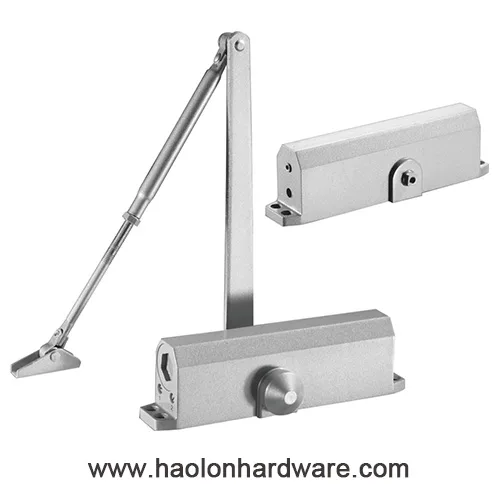
Load-bearing capacity and door width are the top selection criteria, as they directly determine the door closer’s service life. High-quality models clearly indicate their load-bearing grades (e.g., 25kg, 45kg, 65kg, 85kg, 120kg, 150kg) and compatible door widths (e.g., 800mm, 900mm, 1000mm, 1100mm, 1250mm, 1400mm). Ensure precise alignment with the door’s actual specifications:
Residential entrance doors: 45-65kg load-bearing capacity is recommended.
Commercial fire-rated doors: Require load-bearing capacity over 65kg plus fire resistance certification.
Single-leaf doors: Match models for 800-900mm widths; double-leaf doors need wider-compatible variants.
Insufficient load-bearing capacity results in weak closure, while excessive capacity overburdens the door, causing deformation.
2. Material is Paramount: Opt for Durable Construction
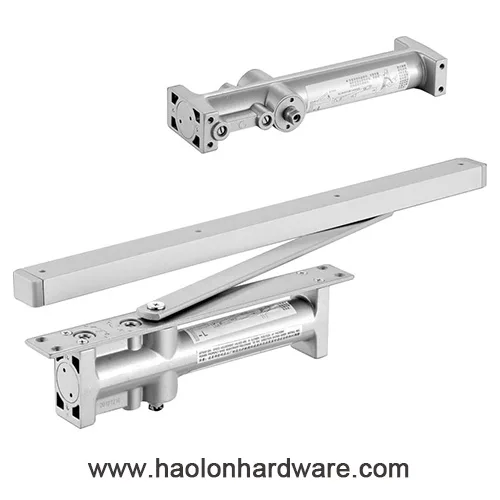
Material forms the "backbone" of a high-quality door closer, directly impacting corrosion resistance and wear resistance. Prioritize models with a high-strength aluminum alloy main body:
Aluminum alloy offers light weight, corrosion resistance (ideal for humid environments), and strong impact resistance, suiting both residential and commercial settings.
Avoid low-quality cast iron, which is prone to rust and breakage—leading to jitter and abnormal noise even after short-term use. Additionally, inspect surface treatment: High-quality products feature uniform spraying, a smooth finish, and no burrs or paint peeling.
3. Core Performance: Prioritize Closure Experience & Safety
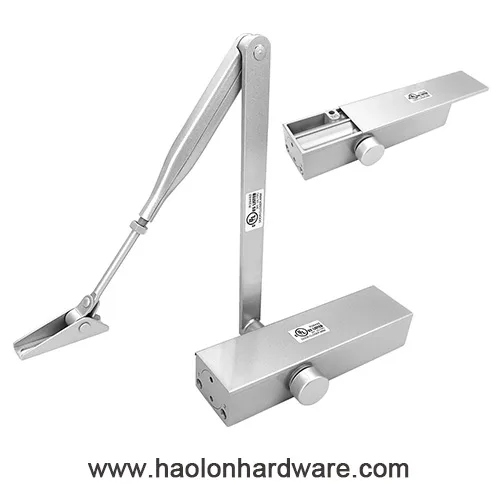
A high-quality door closer excels in three key aspects: "smoothness, quietness, and controllability":
Two-stage closing speed adjustment: Rapid initial closure until reaching ~30°, then a gentle slowdown to prevent frame slamming and hand-pinching.
Quiet operation: Relies on a high-quality hydraulic valve core with tight sealing and smooth oil circulation—eliminating "sizzling" noises during closure.
Positioning function: e.g., 90° positioning keeps doors open for moving large items, enhancing usability.
4. Authoritative Certifications: Non-Negotiable Quality Guarantees
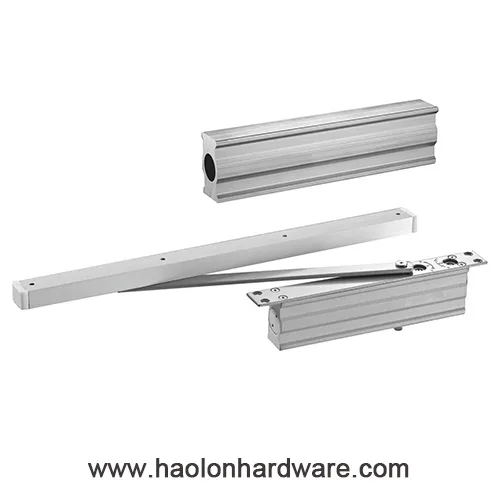
Certifications act as a "quality barrier" against substandard products:
Mandatory requirement: Select models with CCC (China Compulsory Certification) for fire safety—ensuring reliable closure in high temperatures to safeguard escape routes during fires.
International quality references: EU CE certification or US UL certification indicate adherence to stricter production processes and quality control standards.
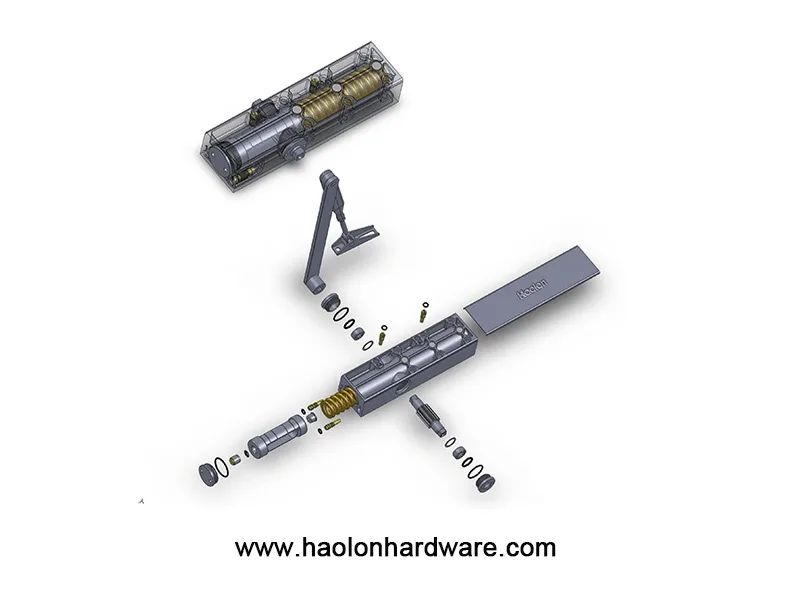
5. Scenario Adaptation: Match Installation Type to Application
Installation type dictates the door closer’s application scenario—an incorrect choice compromises performance. Common types and their uses:
Surface-mounted: Installed on the door’s side, offering straightforward installation and easy maintenance. Suitable for most residential and commercial swing doors.
Recessed: Embedded in the door or frame for a sleek aesthetic. Ideal for residential settings pursuing a minimalist decor style.
Confirm the door structure in advance to select the corresponding installation type.
The selection framework for high-quality door closers boils down to five core principles: specification alignment, durable materials, superior performance, complete certifications, and scenario adaptation. By evaluating products against these dimensions based on your needs, you can avoid substandard options and select a door closer that is both suitable and long-lasting.